Strategies – Supporting receptive communication
To access the strategy you are interested in, click on its title.
- The need to augment spoken language
- Selecting the means of augmenting spoken language
- Augmenting spoken language with signing
- Augmenting spoken language with objects of reference
- Augmenting spoken language with sounds of reference and smells of reference
- Augmenting spoken language with TOBIs
- Augmenting spoken language with photographs
- Augmenting spoken language with life-like pictures
- Augmenting spoken language with pictorial / tactile symbols
- Augmenting spoken language with abstract visual / tactile symbols
- Augmenting spoken language with large print / tactile alternative
- Augmenting spoken language with voice output communication aids (VOCAs)
- Augmenting spoken language with touch
- Augmenting spoken language by using routine to support the young person's understanding of events
- Augmenting spoken language with physical prompts
- Adjusting the language used when communicating with the young person
- Obtaining the young person's attention carefully
- Reducing the amount of spoken language
- Simplifying spoken language
- Giving explicit instructions
- Ensuring only one member of staff gives instructions at any one time
- Asking clear questions and limiting their use
- Avoiding ambiguity
- Avoiding metaphor, simile, sarcasm and idioms
- Avoiding the use of negatives
- Using personal pronouns carefully and consistently
- Avoiding verbal prompts
- Avoiding verbal commentaries
- Using intonation and facial expression with care
- Offering choices
- Providing sufficient processing time / using the "wait for eight" rule
- Checking that the young person has understood
- Informing the young person of when to expect the current activity to end
- Repeating language in exactly the same form as the original
- Understanding when it is not appropriate to initiate communication with the young person
- Minimising clutter
The need to augment spoken language
It is important that practitioners understand The need to augment spoken language when supporting young people with visual impairment and autism. The fundamental reason is that most of these young people (including the cognitively able) have at least some difficulties understanding spoken language. Those who also have learning difficulties will have marked difficulties in this respect.
It is easy for practitioners to over-estimate the ability of some young people with visual impairment and autism to understand spoken language. This is particularly true of those individuals who appear to have a good vocabulary and the ability to produce quite long and complex utterances. These apparently advanced expressive skills can mislead practitioners and family members into believing these young people's understanding must also be very good. But just because a young person often produces sentences of several words, it does not mean he / she can always understand sentences of several words spoken by other people. Also, just because a young person sometimes responds appropriately, it does not mean he / she has fully understood everything the person has said. Young people often respond appropriately because they are familiar with the situation and know what to do.
Young people with visual impairment and autism are different from their typically developing peers with regard to the relationship between understanding and producing spoken language. In most situations, typically developing young people understand more advanced language than they produce. Adults seem to be programmed to know this intuitively, so it can be difficult to adjust to the needs of a young person who produces more advanced language than he / she understands. Practitioners who support young people with visual impairment and autism often need to suspend their intuition; understanding how difficult spoken language can be is an example of how important this is.
Why is understanding spoken language so difficult for autistic people? We have some insights from cognitively and communicatively able sighted autistic adults which help us to answer this question. Crucially, autistic people have extended processing times, especially for spoken language. Therefore, they take longer to work out the meaning of what someone else is saying. So, while the autistic person is processing and trying to understand his / her conversational partner's first sentence, the other person has moved on, and may be producing his / her third or fourth sentence. As the conversation progresses, the autistic person simply cannot keep up and understands very little, if any, of what the conversational partner is saying.
Another factor that may help to explain why spoken language is difficult for young people with visual impairment and autism is that it is quite clearly a social phenomenon – autistic individuals have difficulties understanding social interaction generally. Visual means of communication are probably easier than spoken language for sighted autistic young people because they are not so clearly a social phenomenon. For young people with visual impairment and autism, tactile means of communication may well be easier than spoken language. Tactile means include objects of reference and tactile versions of pictures and print. They are similar to visual means in being less social than spoken language. Tactile means that involve direct contact between people (such as finger spelling and co-active signing) are more obviously social in character and may thus be more difficult for young people with visual impairment and autism. An added difficulty is that many of these young people find light touch aversive.
Another reason for augmenting spoken language is that young people with visual impairment and autism tend to interpret language literally; they find abstract language particularly difficult, and many seem to find spoken language itself to be too abstract; objects, photographs and visual symbols are (in varying degrees) more concrete than spoken language, and may thus be easier to understand.
An important feature of spoken language is that it fades very quickly. In other words, as soon as a word has been spoken, it has disappeared; it cannot be retrieved; it is not possible to return to it – it has simply gone. This means that there is nothing to refer back to; whilst processing is under way, it is not possible to refer back to the message to check it; once processing is complete, the message has gone, and cannot be referred to again. It is possible that some young people with visual impairment and autism have a slight advantage in this respect over their sighted autistic peers. This is because, with little or no sight, some of these young people may develop better auditory processing skills.
In contrast to the very temporary nature of spoken language, many visual means of communication are, or can be, permanent. An object, photograph, or a printed word can remain with the young person. It does not fade or disappear; the young person can retrieve it and review it. Not only can this support initial processing, it means that the young person can return as often as necessary for a reminder and for reassurance.
Most sighted autistic young people are regarded as coping most readily with information presented visually and as learning most effectively through vision. It thus makes sense to augment spoken language visually for those young people with visual impairment and autism who have some residual functional vision. For those who have no useful vision, a tactile means is likely to be essential.
Schedules / timetables can be very supportive: they allow young people with visual impairment and autism to frequently check what is happening later, without the need to repeatedly ask questions. Individuals with some functional vision are likely to benefit from a visual schedule / timetable; those without functional vision can use a tactile alternative. For many young people with visual impairment and autism, a visual / tactile timetable / schedule is enormously helpful in reducing anxieties.
Repetitive questioning is quite common amongst young people with visual impairment and autism. For a discussion of this, see responding positively to the young person's questions.
So, it is common for practitioners supporting sighted autistic young people to augment their spoken language. Those working with young people with visual impairment and autism also need to do this. In summary, this is because these young people
It is important to remember that a young person's ability to understand all means of communication will vary according to the situation. Young people with visual impairment and autism understand best when they are
Even if an individual can sometimes understand spoken language well, there will be times when he / she will be unable to do so. Those occasions cannot be predicted with any certainty. It is therefore important to accept that the young person has difficulty understanding spoken language, and to address that difficulty by always augmenting it.
Augmenting spoken language, in effect, means adopting Total Communication. Total Communication is a communication philosophy. It is not a communication method, nor a teaching method. It is an approach to creating successful and equal communication between people with different communication skills. Using Total Communication amounts to the use of all appropriate means of communication in order to understand the young person and to support the young person to understand you.
Practitioners who adopt the Total Communication approach use Alternative and Augmentative Communication (AAC). There are two main aspects to this
Using Total Communication to support receptive communication can be illustrated by referring to Sarah and Winnie, two of the young people featured in the case studies in this guidance material.
In brief, the staff team around Sarah
When giving Winnie an instruction (e.g. "stand up", "sit down"), the practitioner augments his / her spoken language with the appropriate on-body sign, and also provides a physical prompt. When informing Winnie what is about to happen, practitioners augment their spoken language with an object of reference. Sounds of reference have been used for this purpose, but they are gradually being phased out and additional objects of reference introduced. Members of the staff team believe objects of reference are more age-appropriate for Winnie. They also reduce the amount of spoken language and simplify their spoken language.
Care is needed by those who employ Total Communication: when using more than one augmentative means of communication to support receptive communication, it is important to bear in mind that young people with visual impairment and autism tend to be single-channelled. Thus, at any one time, they may be unable to attend to information involving more than one of the senses. So, for example, simultaneously speaking, signing and presenting an object of reference may be ineffective, as the young person may attend to only one of the senses (hearing, vision, touch); worse, there is a risk that all this sensory stimulation could over-arouse the young person.
The communicative means discussed here should be used to augment spoken language, not to replace it. So, as well as using one or more augmentative means of communication, practitioners using Total Communication with young people who have visual impairment and autism continue to use spoken language. Practitioners should also adjust the language they use when communicating with the young person.
There are several means of communication which practitioners can employ to augment spoken language. They are discussed in turn in the following section.
It is worth bearing in mind that all components of the TEACCH approach provide the young person with information about the events that he / she will be experiencing. Thus, the TEACCH approach can also be viewed as augmenting spoken language.
Selecting the means of augmenting spoken language
Deciding on the most appropriate means for augmenting spoken language for a young person with visual impairment and autism is often complex. The process must be carried out on an individual basis, taking into account the needs and skills of the individual. Key issues, of course, are the young person's age, general developmental abilities, level of vision (if any) and the extent of any learning difficulties. Consideration should also be given to the young person's means of expressive communication (see further below).
Many sighted autistic young people process visual information more easily than auditory information, and learn most effectively through vision. Therefore, for those young people with visual impairment and autism who do have some useful vision, it may be most appropriate to consider the use of one or more visual means of communication to augment spoken language.
Attempts have sometimes been made to place the communicative means for augmenting spoken language in a hierarchy, moving from the simplest (least symbolic) to the most sophisticated (most symbolic). It is tempting to believe that it would be appropriate to start augmenting spoken language by employing the simplest (least symbolic) means and moving through the hierarchy, with the aim, ultimately, of employing the most sophisticated (most symbolic). However, such hierarchies are based on the view-point of communicatively skilled, non-disabled adults. It should not be assumed that any such hierarchy would represent the situation for any individual young person with visual impairment and autism. The discussion that follows inevitably places the augmentative means of communication in a sequence. It must be stressed that this sequence is not intended to be hierarchical. There is no intention to suggest that the young person should progress through the communicative means listed here.
Initially, if the individual is very young, has significant learning difficulties, or major difficulties with the abstract nature of spoken language, a concrete means of communication such as objects of reference may be most appropriate. More able young people may find abstract visual symbols very supportive; these could be enlarged, of course, and could be tactile as well. For those who can read, it may be appropriate to augment spoken language with large print or a tactile alternative.
Naturally, for young people with autism and no useful vision, spoken language will have to be augmented using non-visual means. Objects of reference, TOBIs and pictorial / tactile symbols are the obvious means to consider for the youngest individuals and those who have learning difficulties. For some young people, it may be appropriate to supplement these means, in certain situations with sounds or smells of reference, routine to support the understanding of events and physical prompts and demonstrations.
For older or more able individuals, it may be most appropriate to use abstract visual / tactile symbols or to augment spoken language with large print or a tactile alternative. Promoting tactile reading skills in a young person who is blind and has autism may be extremely important. This is discussed in more detail in the section below on augmenting spoken language with large print or a tactile alternative.
When selecting the most appropriate means to augment spoken language, it is also important to consider how best to support the young person's expressive communication. A very significant difficulty for many young people with visual impairment and autism is that of initiating communication. This seems to be the case regardless of the means other people use when they communicate with the young person. The Picture Exchange Communication System (PECS) has been shown to be an effective approach to promoting the ability to initiate in many sighted autistic young people. PECS is not, itself, a means of communication. The approach can be adapted for individuals with visual impairment: instead of by using pictures, objects or tactile versions of pictures can be employed.
If the young person is to be supported to use objects or visual symbols of some kind (or their tactile equivalent) to communicate expressively, it may make a sense to use the same means to augment spoken language and thus support receptive communication. Using the same means for receptive and expressive communication is probably simpler for the young person; it is certainly simpler for the practitioners who support the individual.
Signing is a means of augmenting spoken language which is very commonly used with people who have a wide variety of disabilities. Naturally, it is not appropriate to use conventional signing when communicating with a young person with visual impairment and autism but no functional vision. It may have some value for some young people in this group who do have some vision. On-body signing may be of value for some young people with visual impairment and autism.
One of the difficulties practitioners face in selecting the means of communication to augment spoken language is that the process tends to rely very much on subjective impressions. The comfor: Forerunners in Communication Test is designed to make the process more objective, but, as yet, is not available in a version for young people with visual impairment.
Augmenting spoken language with signing
Signing is a means of augmenting spoken language which is very commonly used with people who have a wide variety of disabilities. It is not clear how appropriate it is for young people with visual impairment and autism. Conventional signing may be appropriate for some of these individuals who do have some vision. But, of course, it is not appropriate to use conventional signing when communicating with a young person who has no functional vision. On-body signing (described below) may be useful for those without any vision.
For young people with visual impairment and autism, there are some very significant difficulties with signing
Thus, signing is not likely to be appropriate as a means of expressive communication for many young people with visual impairment and autism. This does not rule out the use of signing as a means of augmenting spoken language to support receptive communication; a young person can use different means for receptive communication from those he / she uses expressively.
It is important to note here that a young person with visual impairment and autism may not have sufficient vision to see standard signs, and may require on-body signing. Until recently, the best known approach to on-body signing was probably that developed at the Royal Blind School, Edinburgh: the Canaan Barrie sign vocabulary; see Lee and MacWilliam (2008). Tactile Signing for Sensory Learners (TaSSeLs) is another potentially useful approach; see Woodall and Charnock (2014 ).
TaSSeLs uses touch to promote effective communication and was designed for use with people who have profound and complex learning disabilities.
It is not clear whether either the Canaan Barrie sign vocabulary or TaSSeLs has value for young people with visual impairment and autism. Given that they both rely on proximity and touch, which are difficult for many individuals in this group, they may present difficulties.
When developing the Canaan Barrie sign vocabulary, staff at the Royal Blind School adapted signs from British Sign Language to give auditory and tactile feedback to the young person; signs are made on, or close to the individual whenever possible.
If the young person is tactile defensive, or dislikes another person approaching very close, on-body signing may not be appropriate, at least until the difficulties with tactile defensiveness and proximity have been significantly reduced. This may take a great deal of time with young people who have visual impairment and autism.
A crucial aspect of on-body signing using the Canaan Barrie sign vocabulary is that practitioners avoid taking and manipulating the young person's hands to make the sign. This would require the hand-over-hand approach, which is not recommended for use with young people who have visual impairment and autism. As discussed elsewhere in this guidance material, practitioners should use the hand-under-hand approach.
When signing with a young person who has visual impairment and autism, practitioners should minimise environmental clutter.
Signing must always be used to augment spoken language, not to replace it. Thus, practitioners who sign should always say the relevant word, or key words, at the same time. They should also adjust the language they use when communicating with the young person.
Signing is only used with two of the young people featured in the case studies in this guidance material: Sarah and Jivan. And with both these young people, signing is used in a rather limited way.
Practitioners supporting Sarah use on-body signing in a few specific situations, the main one being when an activity ends: the member of staff says "finished" and produces the on-body sign; in addition, Sarah is then guided to place the relevant object from her object timetable in her finished box, and, again, the member of staff says "finished."
Several signs are used to support Jivan's understanding. Practitioners offer him their hands, and place them under his, i.e. they use the hand-under-hand approach. Because this non-threatening approach is employed, Jivan is very tolerant. He is beginning to spontaneously offer his hands to participate in signing when he understands the meaning of an event or spoken word.
Augmenting spoken language with objects of reference
What is an object of reference?
An object of reference is an object that represents something else to a young person, such as "dinner", "swimming", "music session", or "going to the playground". For example, if a young person learns to associate a particular spoon with "dinner", then, for that young person, that particular spoon comes to mean "dinner": it is that young person's object of reference for "dinner".
Depending on its nature, an object of reference may enable the young person to obtain information from several senses: touch, vision (if they have some useful sight), smell, taste, and sound (e.g. if they bang it against a surface).
For a more detailed discussion of objects of reference, see Ockelford (2002).
Selecting objects of reference
Clearly objects of reference need to be selected by the young person's team. But, whenever feasible, they should be selected with the needs of the young person in mind. If at all possible, each object of reference should have immediate meaning for that individual; in other words, it should be an object that the young person uses during the activity, or experiences during the event. To illustrate this, it is useful to consider two young people who have different objects of reference to represent "going in the car". Prior to the introduction of these objects, both young people became anxious when first getting into the car: they appeared not to understand what was happening.
Afzal always holds on to her seatbelt during car journeys, so it was decided to present her with a piece of seatbelt webbing immediately before taking her to the car. Each time the webbing was presented, the practitioner giving it to her also said "Afzal; car." After a few days, Afzal relaxed as soon as she was given the webbing. She had associated the webbing with the experience of going in the car; in other words, the webbing had become Afzal's object of reference for "going in the car".
In contrast to Afzal, Robert ignores his seat belt during car journeys, so he would be unlikely to attach the meaning "going in the car" to a piece of webbing. However, Robert takes an interest in the drop-down table on the back of the front seat. An identical drop-down table was donated by the local garage. This was given to him immediately before taking him to the car. Each time the drop-down table was presented, the practitioner giving it to him also said "Robert; car." After a few days, Robert relaxed as soon as he was given the drop-down table. He had associated the drop-down table with the experience of going in the car; in other words, the drop-down table had become Robert's object of reference for "going in the car".
There is more about selecting objects of reference below, in the discussions of how they are used with Archie and Ali.
Presenting objects of reference
There are some simple rules for presenting an object of reference: the same object of reference must be presented
The last of these points is crucial: when supporting receptive communication, objects of reference are always used to augment spoken language, not to replace it. Thus, the member of staff who gives the young person an object of reference always says the relevant word(s) at the same time; when using objects of reference, it is important to
Limitations of objects of reference
Objects of reference are not appropriate for all young people: some individuals have no interest in objects, perhaps casting or even throwing any object presented to them; others do not discriminate between objects, treating them all in the same way. For some young people, sounds of reference / smells of reference may have some value.
Developing the use of objects of reference
A significant drawback with objects of reference is that they are relatively difficult to manage. For example, they tend to be bulky and difficult to store, and it can be difficult to make them available for the young person to use expressively. Once the use of full size objects of reference objects of reference is well-established, it may be possible to reduce the size of the objects in some way. There are two obvious methods. One is to use miniature objects instead of the real thing (e.g. a miniature cup from a toy tea-set in place of the real cup which has been used to represent "drink"). The other is to use just part of the real object (e.g. the handle of the cup).
Objects of reference in use
The practitioners supporting Archie have used some objects of reference to augment their spoken language. For example, they wished to use an object of reference to represent "going to the sensory room". For Archie, the most important feature of the sensory room was the ball pit.

Photograph 1
Staff therefore selected a small, yellow plastic ball used in the ball pit. This object truly became an object of reference for Archie as he made the link between it and the activity: for Archie, the ball really did stand for "going to the sensory room".

Photograph 2
In fact, over time, as balls were mislaid, others were used. On one occasion, the yellow ball which had been used was inadvertently replaced with a red one. Fortunately, the change of colour did not matter to Archie: he used the red ball as effectively as he had used the yellow one.
Objects of reference are used with Ali. When they first introduced objects of reference, the staff recognised it was important, if possible, to use objects he experienced during the activities in question. This was possible in respect of some of the events for which the staff wanted to use objects of reference. For example, because Ali used a spiky ball sometimes in his play, they decided it would be appropriate to use it to represent "play-time". Ali quickly made the link between the spiky ball and play-time, indicating it was a true object of reference.

Photograph 3
Staff also wanted to use an item to represent "time to sit". However, this seemed to be more difficult: there was no object that staff expected Ali to connect with sitting. They decided to trial the use of a small toy chair. Staff realised this might be problematic: Ali would be unable to see the similarity between the toy and a real chair and, regarding touch, the toy would feel very different from a real chair. Although Ali did not make the link between the toy chair and "time to sit" as quickly as he had made the link between the spiky ball and "play-time", he did nevertheless, make the link: the toy chair became a true object of reference for sitting.
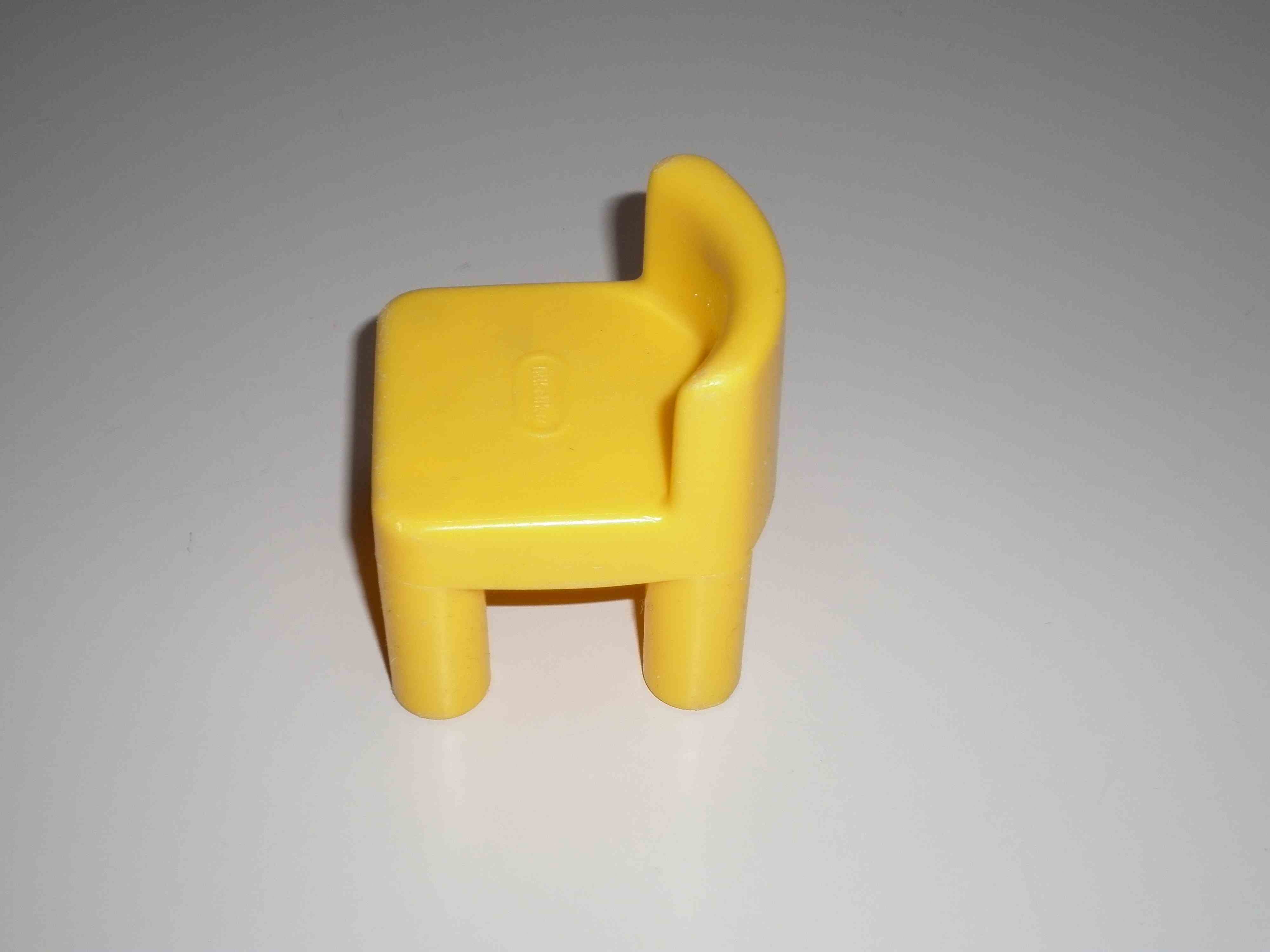
Photograph 4
Sarah, Sebastian, Tyler and Archie all have mobility sessions during which they are learning to use the long cane. The long cane can be viewed as an object of reference for mobility training. This is because it makes the nature of the session clear to the young person at the outset and is a constant reminder of it throughout the session. The long cane can also be seen as an aspect of task structure, a component of the TEACCH approach.
Objects of reference can be used in schedules / timetables to inform the young person of the sequence of lessons, activities and events. This is the case, for example, with Sarah.
For information about using objects of reference to promote expressive communication, refer to the description of PECS in promoting the ability to initiate.
Augmenting spoken language with sounds of reference and smells of reference
Although objects of reference can be used successfully to augment spoken language for some young people with visual impairment and autism, they are not appropriate for all such individuals: some of these young people have no interest in objects, perhaps casting or even throwing any object presented to them; others do not discriminate between objects, treating them all in the same way. For these young people, sounds of reference / smells of reference may have some value.
Some practitioners use a combination of objects of reference, sounds of reference and smells of reference. Whilst it is generally the case that Total Communication is concerned with promoting communication using as many appropriate means as possible, there is a very real risk of overloading young people with visual impairment and autism. Presenting an object of reference, a sound of reference and a smell of reference simultaneously (or even in quick succession) may be far too stimulating for many young people, especially as these means should all augment, not replace spoken language; thus the young person would also be exposed to spoken language. An alternative to presenting an object of reference, a sound of reference and a smell of reference simultaneously, or in quick succession, is to present them sequentially, with a clear interval between them. However, that may prolong the process so much that the young person will be unable to make the connection between the items (the object, the sound and the smell) and the activity. Thus, the object will not become a true object of reference; the sound will not become a true sound of reference; and the smell will not become a true smell of reference.
There is an important difference between visual and tactile experiences on the one hand and sounds on the other. This is significant when more than one young person is present. Although visual and tactile experiences can be offered to an individual without any other young people present being exposed to them, this is not possible with sounds. A sound one young person likes may be aversive to another. Nevertheless, if used carefully, sounds of reference can effectively augment spoken language. For example, cutlery could be placed noisily on the table to represent "dinner". Some young people seem to benefit from musical sounds of reference. Their use with Sarah is discussed below in the section on using routine to support the young person's understanding of events. Sounds of reference should always be used to augment spoken language, not to replace it. Thus, when using sounds of reference, it is important to
Smells of reference are used by some practitioners to augment spoken language, for example, when introducing activities, or even to represent the days of the week. However, it is important to note some major potential difficulties with regard to using smells. First, it must be understood that smells are very different from visual, auditory and tactile sensory experiences. Whereas a practitioner has considerable control over stimuli the young person will see, hear or touch, it is much more difficult to control smells. The kinds of visual, auditory and tactile experiences used to support a young person's communication are presented by the practitioner only when required and removed when no longer required. However, smells can linger, and it may not be possible to "cut off" a smell when it is no longer needed. Practitioners also have little control over the young person's casual exposure to smells; so, for example, if the smell of lavender is used as a smell of reference for a particular activity, the practitioner cannot prevent the young person coming into contact with the smell of lavender at other times, such as when using soap.
Visual and tactile experiences can be offered to individuals without other any young people present being exposed to them. This is not possible with smells. Care is required, as some young people with visual impairment and autism have strong aversions to some smells.
Reference has already been made to the practitioner having relatively little control over smells; the young person is likely to have even less control: if a smell is present, there is nothing a young person can do to shut off that smell, except to leave the situation. This may not be an option for a young person in an educational setting. In contrast, the individual can look away from a visual stimulus, or close his / her eyes; can shut out an unpleasant sound (e.g. by placing his / her hands over his / her ears, or by making a louder sound him- / herself); can avoid an unpleasant tactile experience, by refusing to touch, or by withdrawing his / her hands.
Some practitioners working with young people who have visual impairment and autism provide smells of reference. They do so by using oils employed in aromatherapy, and other similar sources of strong smells. It is important to stress that safety concerns have been expressed over several of these. The original version of this guidance material included information about these safety concerns which was then available on the BUPA website. It no longer appears to be available, so is summarised here.
In brief, the information stated that in their concentrated form the oils used in aromatherapy might be poisonous. It went on to say that aromatherapy may not be appropriate for everyone. Extra care is required for young people with
Aromatherapy oils can also have side-effects, including
Oils should not be used on the skin, especially broken skin. They should not be swallowed or applied directly inside the body (for example, inside nostrils or ears).
Aromatherapy is not suitable for young people who have
Some essential oils may either reduce or enhance the effects of certain conventional medicines. Their use should always be checked with the GP.
The following is adapted from the advice BUPA previously provided on using aromatherapy at home
In general, then, smells of reference are problematic for young people with visual impairment and autism. A few smells, used in a very carefully structured way may have a place for some young people. For example, a towel or pair of swimming trunks impregnated with the smell of chlorine might be an appropriate object of reference to represent "swimming". The smell of coffee might be used to support the use of a cup as the object of reference to represent "drink" – if the individual were about to drink coffee. The use of smells in this way would need to be approached very cautiously.
Practitioners do not use smells of reference to augment their spoken language with any of the young people featured in the case studies in this guidance material. Smells of reference should always be used to augment spoken language, not to replace it. Thus, when using smells of reference, it is important to
Augmenting spoken language with TOBIs
A true object-based icon (TOBI) is a photograph or line drawing, which is cut out in the actual shape or outline of the item it represents. This allows the young person not only to see the symbol shape (assuming, naturally, that the individual has some useful vision), but also to feel it. A TOBI is usually larger than the typical equivalent photograph or drawing.
For more information on TOBIs, see Stokes (not dated).
Some practitioners believe using TOBIs supports the young person to understand 2-dimensional representations. However, it is important to bear in mind that, although the TOBI is cut in the shape of the photograph or line drawing, it will feel significantly different from the object it represents. Thus, it may be very difficult for the young person (especially one who has little or no sight) to make the link between the TOBI and the object.
In theory, TOBIs could provide an interim stage between objects of reference (perhaps miniaturised) on the one hand and photographs, life-like pictures or pictorial / tactile symbols on the other.
As a TOBI can be based on a photograph, it is important to note here that photographs (and therefore TOBIs based on photographs) have a major drawback: they are specific, and a young person with visual impairment and autism may not be able to generalise. This is described below, in the section on photographs. It is probably best to avoid the use of TOBIs based on photographs with young people who have visual impairment and autism.
TOBIs should always be used to augment spoken language, not to replace it. Thus, when using TOBIs, it is important to
Practitioners do not use TOBIs to augment their spoken language with any of the young people featured in the case studies in this guidance material.
Augmenting spoken language with photographs
In most cases, a photograph is, of course, an accurate representation of the real object, and, for most people, is immediately recognisable. The photographs below are easily recognisable (to a typical adult) as being of a drum, tambourine and music keyboard.

Photograph 5

Photograph 6
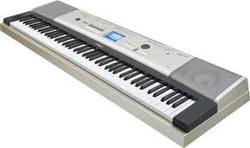
Photograph 7
Photographs have a major drawback: they are specific, and a young person with visual impairment and autism may not be able to generalise. For example
In addition, there is scope for the young person to associate a photograph with a feature of it that is incidental from the perspective of the practitioners. For example, if "practitioner A" is represented in a photograph which also has one of the young person's favourite toys in the background, the young person may take the photograph to represent that toy, not practitioner A.
Because of these difficulties, it is probably best to avoid the use of photographs with young people who have visual impairment and autism.
If photographs are used to augment spoken language, they should always be used to augment it, not to replace it. Thus, when using photographs, it is important to
Practitioners do not use photographs to augment their spoken language with any of the young people featured in the case studies in this guidance material.
Augmenting spoken language with life-like pictures
A life-like picture is a reasonably accurate representation of the actual item. Correctly identifying a life-like picture depends not only on just how life-like the picture is, but also on life experience and on general symbolic ability. The life-like pictures below are easily recognisable (to a typical adult) as being of a drum, tambourine and music keyboard.

Picture 1

Picture 2
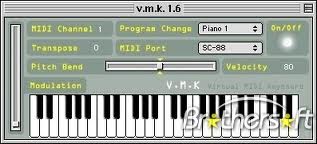
Picture 3
Life-like drawings should always be used to augment spoken language, not to replace it. Thus, when using life-like drawings, it is important to
Practitioners do not use life-like drawings to augment their spoken language with any of the young people featured in the case studies in this guidance material.
Augmenting spoken language with pictorial / tactile symbols
A pictorial symbol, whilst still being a reasonably accurate representation of the actual item, is more symbolic than a life-like picture. Correctly identifying a pictorial symbol requires a more advanced level of symbolic ability than for life-like pictures. The pictorial symbols below are still easily recognisable (to a typical adult) as being of a drum, tambourine and music keyboard. However, they may present some difficulties to a sighted autistic young person who is operating at a very concrete level. In fact, these pictorial symbols are combined into one pictorial symbol to represent "music". It was taken from the Oxfordshire Total Communication website.
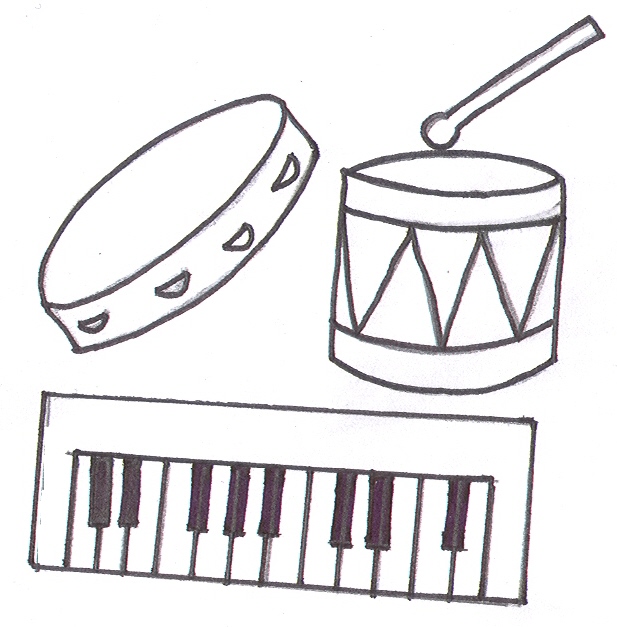
Picture 4
In principle, it is possible to make a tactile version of a pictorial symbol, using Zy-Tex Paper and a Zy-Fuse Heater. However, the more detailed the pictorial symbol, the more difficult it is to make a clear tactile version.
Pictorial / tactile symbols should always be used to augment spoken language, not to replace it. Thus, when using pictorial / tactile symbols, it is important to
Practitioners use pictorial / tactile symbols to augment their spoken language with only one of the young people featured in the case studies in this guidance material: they are sometimes used by staff when communicating with Amanda, and were used in assessing her naming skills.
Augmenting spoken language with abstract visual / tactile symbols
An abstract visual symbol is more symbolic again than a pictorial symbol. As can be seen from the examples below, some are very abstract. There are many systems of abstract visual symbols, produced by several organisations. The first examples are taken from the Widgit website:

Symbol 1
The row of symbols below, taken from the Blissymbolics Communication International website, reads "Welcome to BCI".

Symbol 2
In principle, it is possible to make a tactile version of an abstract symbol, using Zy-Tex Paper and a Zy-Fuse Heater. However, the more detailed the abstract symbol, the more difficult it is to make a clear tactile version.
Archie has a timetable which uses tactile versions of abstract symbols. These are based on the standard range of Widgit symbols (superseded by the Communicate in Print Programme) used by his peers.
To support Stacey's mobility around school a tactile symbol is used to label each room to indicate the activity that takes place there; alongside the tactile symbol is a caption in Moon (see next section).
Tactile versions of abstract symbols should always be used to augment spoken language, not to replace it. Thus, when using tactile versions of abstract symbols, it is important to
Augmenting spoken language with large print / tactile alternative
Many sighted autistic young people who can read benefit from having spoken language augmented in print. For example, this can be used in a schedule / timetable and to provide instructions for carrying out tasks.
Bob is able to read large print. The staff supporting him augment their spoken language with print, using N print 32, in the Arial font. Indeed, Bob is provided with a large print schedule every day. He can return to consult this as often as he needs for reassurance and to be reminded of what is happening. This has helped to reduce his anxieties. Bob also has a large print schedule for every educational task and for tasks such as taking the register to the office; this is described in giving explicit instructions.
Braille can be used as an alternative to large print. Because of its rigid, rule-bound nature, braille can become very motivating to a young person with visual impairment and autism; it may thus provide the individual with an opportunity to excel; in turn, this is likely to raise self-esteem.
For information about a young person with visual impairment and autism learning and using braille, see Clarke (2010).
Cecily has a daily brailled timetable in school.
Archie is currently reluctant to learn Braille because he can read print at N28. However, as he is anxious about forthcoming events, being able to read braille has great potential value for him. A start has been made on using braille in his timetable.
Some young people with visual impairment and autism, who cannot manage the complexities of braille, are able to read Moon. This can be used for several purposes, including in a schedule / timetable.
To support Stacey's mobility around school a tactile symbol is used to label each room to indicate the activity that takes place there; alongside the tactile symbol is a caption in Moon. Staff have also used Moon to label items in the classroom and cloakroom: these items include Stacey's drawer and coat peg and those of her peers.
In the medium term, it may be possible to use Moon to augment spoken language for Stacey.
Large print or a tactile reading system should always be used to augment spoken language, not to replace it. Although the young people who use large print or a tactile reading system are towards the upper end of the ability range, it is still be important to
Augmenting spoken language with voice output communication aids (VOCAs)
Naturally, voice output communication aids (VOCAs) are of no value for young people with visual impairment and autism who do not have any understanding of spoken language. Nevertheless, some individuals may benefit from a simple recorded message that provides information.
For example, simple VOCAs may have a very limited role in promoting the independence of some young people with visual impairment and autism: it may be appropriate to use them to label rooms and to label items in the classroom and cloakroom.
However, VOCAs need to be used with caution. Some young people with visual impairment and autism might become deeply interested in VOCAs, and may return to them repeatedly to hear the messages over and over again. In addition, some VOCAs permit a new message to be recorded, deleting the previous one; a young person may discover this and render the devices ineffective.
At one time, the staff in Bob's school used simple VOCAs to label some of the rooms. Bob became fascinated with the devices and discovered that he could record his own inappropriate messages, so deleting the messages recorded by staff. Use of the VOCAs was therefore abandoned.
Practitioners do not currently use VOCAs to provide information to any of the young people featured in the case studies in this guidance material.
Augmenting spoken language with touch
Some young people with visual impairment and autism benefit when spoken language is augmented with touch. For example, Cecily faces challenges in understanding mathematics. To help her to understand spatial concepts, Cecily finds it useful when the teaching assistant (TA) "draws" a shape on her back to augment her spoken description. The TA draws through Cecily's clothes. Cecily likes the touch to be firm. If it is not sufficiently firm, she says that it is ''horrid" and asks the TA to stop. In the past, the TA has attempted to "draw" on Cecily's hand; however, Cecily is very sensitive to being touched on her hands and arms, and school staff now avoid this.
Augmenting spoken language by using routine to support the young person's understanding of events
Routine is frequently used to provide stability and predictability for many visually impaired learners, particularly those who are young and those who also have learning difficulties. Routine is also used in this way with sighted autistic young people. Not surprisingly, therefore, it is used with some young people with both visual impairment and autism. Indeed, routine is discussed in the section on promoting positive behaviour in which there is material on:
In effect, routine is another means of communication. This is the case for Ali, who appears to know his usual routine. By keeping to the routine, and using of objects of reference, staff support his understanding of what he is required to do / what is happening next.
For Sarah, music lessons have a clear routine. Establishing this routine was made easier in some respects, as the lesson takes place in the school's music room, not in Sarah's classroom. This may help to make the routine more recognisable to Sarah. Before leaving her classroom, Sarah is supported to take from her timetable the object of reference (small bells) that represents "music". Part of the music lesson routine is the transition from her own classroom to the music room. During this transition, staff quietly hum "I am the music man". In effect, this is a sound of reference. On arrival in the music room, a piece of music (part of Britten's "The young person's guide to the orchestra") is always played as a second sound of reference.
As well as using routine to communicate to the young person what kind of activity is beginning, it is useful to employ routine to communicate that the activity is finishing. Sarah's music lessons, then, always close with a third sound of reference; this is a piece of quiet, relaxing music (part of Rodrigo's "Concierto de Aranjuez"). The three sounds of reference used in relation to Sarah's music lessons are always the same, as is the routine.
Routine can also be used to promote expressive communication by providing opportunities for the young person to communicate. Potentially useful strategies are
Augmenting spoken language with physical prompts
Although augmenting spoken language with physical prompts is problematic (see below), this strategy is employed with two of the young people featured in the case studies in this guidance material.
For example, when the teaching assistant (TA) working with Winnie says "stand up", she augments this with the on-body sign and physically prompts Winnie: she places her hand under Winnie's forearm and gently raises it. As the TA says "sit down", she produces the on-body sign and then physically prompts Winnie by applying gentle downward pressure on Winnie's shoulders. In this situation, it is likely that Winnie is further supported by feeling her chair on the back of her legs.
The staff who support Ali augment their spoken language with hand-under-hand physical prompts and demonstration. That is, staff place their hands under Ali's when demonstrating a task and when prompting him physically to carry out a task. The hand-under-hand approach has important advantages over the hand-over-hand approach. These are explained in supporting the young person with the hand-under-hand approach.
A potential difficulty with physical prompts: using touch
Many young people with visual impairment and autism do not tolerate being touched by another person. This includes some of the young people featured in the case studies in this guidance material, including Cecily and Bob. Cecily particularly finds having her hands and arms touched very aversive. Physical prompts are likely to be inappropriate for such individuals.
The risk of prompt dependency
A significant drawback with all prompting is the very real risk that it will result in the young person becoming prompt dependent. An individual who is prompt dependent relies on being prompted every time to carry out the behaviour or task, and never does so spontaneously.
Before using any physical prompts, it is important to have a clear idea about how they will be faded. Fading is the process of gradually reducing and then removing a prompt. This is necessary, as it is not usually feasible to suddenly remove a prompt. Fading needs to be tackled systematically. A physical prompt used with Winnie can serve as an example. As described above, when the teaching assistant says "stand up", she produces the on-body sign and then physically prompts Winnie by placing her hand under her forearm and gently raising it. This physical prompt could be faded by gradually applying less and less pressure with the hand under Winnie's forearm.
However, caution is required here: as noted above, many young people with visual impairment and autism do not tolerate light touch, so fading a firm physical prompt by making the touch lighter may not be feasible. Another possible way to fade a prompt such as that used with Winnie would be for the practitioner to gradually reduce the duration of the prompt; so, the physical prompt could last for 10 seconds initially, then 8, then 6 and so on. However, making the final step from (say) a 2 second physical prompt to no physical prompt at all could present major difficulties.
It is particularly difficult to avoid prompt dependency when verbal prompts are used, and it is suggested that practitioners should avoid verbal prompts whenever possible.
Adjusting the language used when communicating with the young person
When communicating with a young person who has visual impairment and autism, it is necessary to augment spoken language. However, although this is necessary, it is not sufficient. It is also important to adjust the language used. There are several ways in which this should be done: by
Obtaining the young person's attention carefully
Very often when we give an instruction, ask a question or give information, we include the name of the person; we typically place the name after the instruction or question
Placing the name at the end is effective when instructing, questioning or informing a neuro-typical person. However, it is much less likely to be effective when instructing, questioning or informing a young person with visual impairment and autism. This is because the young person is unlikely to attend until he / she hears his / her name; if this is placed at the end, the instruction, question or information has gone without the young person even being aware of it.
When communicating with a young person with visual impairment and autism, it is important to obtain his / her attention before giving an instruction, asking a question or providing information. The most effective way to do this is by saying the young person's name first, before anything else, and then pausing. Because it is so important, in so many contexts, saying the young person's name first, before saying anything else is one of the Underlying principles in this guidance material.
Reducing the amount of spoken language
As discussed in the need to augment spoken language, most young people with visual impairment and autism have difficulties understanding spoken language. This is because they
In fact, much of the spoken language we produce is redundant; in other words, much of what we say is not strictly necessary as far as communicating our meaning is concerned. The redundancy of much spoken language may be helpful for promoting the expressive skills of young typically developing children, as it is part of providing them with a rich verbal input.
But because spoken language presents difficulties to young people with visual impairment and autism, it is important to reduce the amount of it. And because of the redundancy of much spoken language, reducing the amount of it – i.e. cutting out the redundancy – does not make it harder to understand. On the contrary, it makes it easier.
The redundancy of much spoken language can be illustrated with the following set of utterances, which a practitioner might say to a young person at the end of the school morning:
"Right. It's dinner time. I'm hungry. I bet you are too. We're going to the hall."
Of the 16 words here, only 1 is strictly necessary in many circumstances: "dinner." For many young people with visual impairment and autism, this single word is sufficient. Using more words is unnecessary; worse, using more words may well prevent the young person processing, understanding and responding appropriately. Depending on the precise context, it may be necessary to say the young person's name first, as described in the previous section. In one set of circumstances, it would be necessary to add "hall" and say "Dinner. Hall"; this would be the case if eating dinner sometimes took place in, say, the classroom and on some days, and in the hall on others.
The amount of spoken language should be reduced for all young people with visual impairment and autism. Doing so may well come naturally when communicating with a young person who has limited expressive communication; this is because adults are programmed to adjust their output for those who are communicatively less able. Reducing the amount of spoken language for a young person who has (or appears to have) good expressive communication may be much harder. But it is a skill practitioners require.
Reducing the amount of spoken language is not specifically mentioned in all the case studies in this guidance material. This is, perhaps, because it becomes such a basic, fundamental aspect of supporting young people with visual impairment and autism, that it was frequently overlooked. In fact, spoken language is reduced for all the young people. Ali is the only young person featured in the case studies who is discussed here.
The teaching assistant (TA) who supports Ali uses reduced spoken language when referring to his current activities and experiences. She does so with the intention of extending Ali's receptive vocabulary. For example, she labels
The TA avoids verbal commentaries, as she is aware that these would overload Ali and that he would, in any case, fail to understand them. In other words, the TA does not describe to Ali what is happening around him or describe what he is doing in any detail.
In addition to reducing the amount of spoken language, it is essential that practitioners allow the young person plenty of time to process what has been communicated. This is discussed further in providing sufficient processing time / using the "wait for eight" rule.
In effect, reducing spoken language amounts to providing what it sometimes called the minimal speech approach, in which spoken language is used only when it is essential. For information about the minimal speech approach, see Potter and Whittaker (2001).
Reducing spoken language, then, has two elements
Although reducing the length and complexity of sentences necessarily means simplifying them, it is important to simplify spoken language in other ways as well.
In addition to reducing spoken language, practitioners should, of course, augment spoken language for young people with visual impairment and autism.
Reducing spoken language is particularly important when the young person is
Reducing spoken language means that banter must be avoided. It can be tempting to engage in banter with the young person during some educational tasks, during transitions around school and during mobility training. In fact, young people with visual impairment and autism need to attend closely in these situations. As the individual is likely to be single-channelled, he / she may simply ignore any banter; if so, it is pointless. However, the young person may find banter distracting or even over-stimulating and may be unable to focus on the educational task, transition or the mobility training; if so, the banter does, of course, have a negative impact. In any case, banter involves humour and, therefore, often metaphor, simile, sarcasm or idioms. Because young people with visual impairment and autism have literal understanding, it is advisable to avoid metaphor, simile, sarcasm and idioms.
Some young people with visual impairment and autism may be unable to process spoken language at all in some situations. Practitioners need to understand when it is not appropriate to communicate with the young person.
Simplifying spoken language
As discussed in the need to augment spoken language, most young people with visual impairment and autism have difficulties understanding spoken language. This is because they
When communicating with a young person who has visual impairment and autism, practitioners should reduce the amount of spoken language. As noted there, one element of reducing spoken language is reducing the length and complexity of sentences. This necessarily means simplifying them. However, spoken language should be simplified in other ways too. There are several ways in which practitioners can achieve this; they should
In addition to reducing and simplifying spoken language, it is also essential to
Spoken language should be simplified for all young people with visual impairment and autism. Doing so may well come naturally when communicating with an individual who has limited expressive communication; this is because adults are programmed to adjust their output for those who are communicatively less able. Simplifying spoken language for a young person who has (or appears to have) good expressive communication may be much harder. But it is a skill practitioners require.
Simplifying spoken language is particularly important when the young person is
Simplifying spoken language is not specifically mentioned in all the case studies in this guidance material. This is, perhaps, because it becomes such a basic, fundamental aspect of supporting young people with visual impairment and autism, that it was frequently overlooked. In fact, spoken language is simplified for all the young people.
Giving explicit instructions
As noted in reducing the amount of spoken language, much of the spoken language we produce is redundant; in other words, it is actually unnecessary. This is often the case when giving instructions. An example is "You're back at your chair now. I want you to sit down, please." Of the 13 words here, only 1 is really necessary in this situation: "sit." For many young people with visual impairment and autism, this single word is sufficient. Not only would more words be unnecessary, they may prevent the young person from processing the instruction, understanding it and responding to it. When giving instructions, practitioners should reduce the amount of spoken language, simplify their spoken language, avoid ambiguity and augment their spoken language. Above all, perhaps, they should be explicit.
It is important to understand that many instructions actually refer to a task with multiple steps. Including all the steps in a series of spoken instructions would be likely to overload the young person. This would prevent the individual from processing the instructions, understanding them and responding to them. Thus, giving multiple spoken instructions should be avoided.
Describing a scenario Bob frequently experiences will illustrate this. Bob is often required to take the register to the office. But telling him to "Take the register to the office" is not sufficiently explicit. A typically developing young person would implicitly understand that this means
However, although Bob would probably take the register to the office, he would not understand what to do with it once there (unless someone was present to take the register from him); the instruction does not tell him what to do with the register. And he would not understand the need to return; again, the instruction does not tell him that he is to return.
It is therefore particularly important to ensure that Bob's instructions are explicit and that no element is omitted. This is because Bob does not have the ability to "fill in the gap"; if a step is omitted from the instruction, Bob does not carry it out. This presents a dilemma. Bob can attend to, process, understand and carry out an instruction such as "Take the register to the office"; but this instruction would be inadequate for him because it omits two of the steps he requires. However, including those two additional steps in the spoken instruction would make it too lengthy and complex: "Take the register to the office; put it on the desk; and then come back."
Bob would be unlikely to attend to this lengthy, complex instruction. Even if he attend to it, he would be unlikely to process all of it, so he would be unlikely to understand it all. And even if he did understand it all, he would be very unlikely to retain all the steps in his memory while carrying out the task: once he arrived in the office, he would be unlikely to remember to put the register on the desk and then to return. The solution to this dilemma is to give Bob a reduced spoken instruction, augmented with a fuller printed one. He is told to "Take the register." The printed instruction is actually in the form of a mini schedule for the task:
Take the register to the office
Place the register on the desk
Come back to this room
Bob always has a pencil in his pocket, and draws a line through each instruction as he completes that section of the task. The printed instruction / mini schedule is in large print: N print 32, using the Arial font.
It is also necessary to be very explicit when telling Bob what to do in a lesson. As he has some vision, Bob sometimes has a visual art lesson. On one occasion, a teaching assistant (TA) gave him the following instruction: "Bob, paint a mountain." He responded "I can't paint a mountain." Because the TA did not appreciate that Bob has literal understanding, she became irritated, and repeated the instruction. Bob also became annoyed: he knew he could not paint a mountain. The TA repeated the instruction several more times, with Bob repeating "I can't." The TA became increasingly irritated, and Bob went into crisis. When this incident was reviewed, it was explained to the TA that Bob has literal understanding and that a more appropriate instruction would have been "Bob, paint a picture of a mountain." In fact, this incident also pointed up the need for a tighter procedure for providing Bob with a large print mini schedule for all lessons. All staff were made aware of the need to plan activities very carefully in advance and to provide a large print mini schedule for all lessons and tasks.
Tyler has sometimes responded to an instruction in what seems to be a rude, cheeky or flippant manner. This is the case when the instruction was given in question form, as in "Can you go to dinner now?" On occasions, Tyler has responded "Yes, I can" to such instructions. This is not rudeness, cheekiness or flippancy: Tyler is being literal, and actually answering the question he has been asked. Staff now avoid the use of indirect "polite" forms of instructions, and give explicit instructions.
However, it is difficult to be entirely consistent, and there are times when Tyler is inadvertently given a question-form instruction. If Tyler responds literally, staff avoid showing annoyance and do not comment in any way. Showing annoyance is pointless, as Tyler simply does not understand why the other person should be annoyed. Trying to explain to Tyler that he has responded inappropriately is counter-productive: it causes an escalation in the situation, possibly resulting in him going into crisis.
Staff supporting Tyler also avoid indirect instructions such as "I want you to go to your classroom now." This is because there is a risk that he will respond by saying "I don't want to", without actually carrying out the instruction. Instructions for Tyler are as clear, short and simple as possible: "Go to your classroom." If he is stressed, this is shortened to "Go classroom."
Of course, when giving an instruction, there is an expectation that the young person will carry it out. Most young people readily process spoken language with no obvious delay. Individuals with visual impairment and autism, however, require longer than their typically developing peers to process spoken language, so it is important to provide sufficient processing time / use the "wait for eight" rule.
If the young person fails to respond to an instruction, it is best to repeat it in exactly the same form as the original.
Ensuring only one practitioner gives instructions at any one time
Tyler becomes very confused if more than one person gives instructions: he is unsure which person and which instructions he should respond to. Staff have therefore adopted a strategy whereby in any one situation, only one member of staff gives instructions. Because of the safety issues, this is particularly important in swimming lessons.
Asking clear questions and limiting their use
Many young people with visual impairment and autism have considerable difficulties responding to questions. This is especially true of "open" questions which give little or no indication of the expected answer. In effect, a question requires the person answering it to choose the answer; many young people with visual impairment and autism find making choices difficult, even when the number of options is very restricted and clearly stated; see further offering choices. "Open" questions (such as "What did you do yesterday?") are particularly difficult for because they have so many possible answers.
It may be best to seek information from a young person who has visual impairment and autism with great care. When doing so, it may be advisable to avoid an open question, such as "What did you do at the weekend?" An alternative strategy is to present instead an unfinished sentence to be completed. This is often more effective in eliciting an appropriate response. So, in this case, the practitioner could say "At the weekend Dad took you …… (swimming)." However, this strategy relies on the questioner knowing the answer; clearly, this may not be the case when trying to find out what the young person did at the weekend. One solution is to employ a home-school book so the family can record such information.
Questions can be turned into statements to be completed during lessons. Thus, the question "When was the Battle of Hastings?" can be presented as the incomplete statement "The Battle of Hastings was in the year …."
Questions are frequently used by teachers to check that the young person has retained some information or has understood a concept. Some young people with visual impairment and autism regard such questions as pointless, as they know the questioner knows the answer. They should therefore be used with caution. Statements to be completed may be less problematic in this respect.
Bob finds answering questions very difficult, so these are kept to a minimum. He is only asked a question when he is calm, and he is only asked very simple and direct questions which relate to his immediate needs; e.g. "Do you want a drink?" He sometimes responds "Yes" but does not spontaneously say what he wants to drink. In such a situation, if he is calm, he is then offered a choice.
It is important to be aware that asking a question such as "Do you want a drink?" deprives the young person of an opportunity to initiate and make a spontaneous request. As initiating is so difficult for many young people with visual impairment and autism, it is advisable to promote the ability to initiate and to provide opportunities to communicate. It may, therefore, be best to avoid asking questions related to the young person's needs and desires, as this reduces opportunities to initiate.
Of course, when asking a question, there is an expectation that the young person will respond. Most young people answer questions with no obvious delay. Many individuals with visual impairment and autism, however, require longer than their typically developing peers to process spoken language, so it is important to provide sufficient processing time / use the "wait for eight" rule.
If the young person fails to respond to a question, it is best to repeat it in exactly the same form as the original.
Cecily finds it more difficult to answer "why" questions than those involving "who" or "what." Staff try to ensure they make their questions clear and provide Cecily with sufficient processing time. If she fails to respond to a question, the member of staff may repeat it in exactly the same form as the original; this strategy is used if it appears that Cecily has either misheard the question, or not fully processed it.
However, if Cecily seems to have failed to understand the question, the member of staff recasts it as an unfinished sentence to be completed. The following example concerns a character in a story
Avoiding ambiguity
Young people with visual impairment and autism tend to interpret language literally. This can cause considerable difficulties unless practitioners adjust their language accordingly.
It is advisable to bear in mind that some very commonly used words and phrases that are readily understood by typically developing young people are confusing for those with autism. A way to illustrate this is by describing an incident which might take place in assembly: a young person with visual impairment and autism gets up from his seat, runs to the musical instruments stored at the side of the hall and starts to bang the drum. His teacher says "You can't play the drum in assembly." Most young people would interpret this as meaning "I don't allow you to play the drum in assembly." However, young person with visual impairment and autism, interpreting this very literally, may think the teacher means "You do not have the ability to play the drum in assembly." The individual, knowing he / she does have this ability, may become very confused, and even stressed.
Another important point is relevant here. Telling the young person "I don't allow you to play the drum in assembly" is not very helpful. This is because it fails to tell the individual what he / she is allowed to do. Young people with visual impairment and autism need very clear information about what they should be doing. Telling them what they should not be doing is unhelpful. (See also providing clear boundaries which inform the young person of what is acceptable behaviour.)
A common source of ambiguity is words and phrases connected with time. For example, when responding to a young person's request to do something, it is best to avoid saying such things as "wait a minute," "soon" and "later." The young person with visual impairment and autism may not understand such time concepts and may become very impatient or confused. On the other hand, the individual may have a very good idea of what a minute is and may expect to wait, literally, for one minute.
It is important to be explicit and avoid ambiguity when responding to a young person's expressive communication; see
Being explicit and avoiding ambiguity are particularly important when giving instructions.
Avoiding metaphor, simile, sarcasm and idioms
Most young people with visual impairment and autism understand language literally and do not understand metaphors, similes, sarcasm or idioms. For example, idioms such as "Pull your socks up," "I've got my eye on you" and "Trying to be clever again, are we?" are difficult and should be avoided.
The difficulties young people with visual impairment and autism have with language like this can be illustrated by referring to an incident involving Cecily. This occurred when her class teacher told her that she must "stick to the task." Cecily very deliberately put both hands, palms down, on her braille work and said, very seriously, "Yes, miss, I'm doing that." In this situation, the teacher did not observe Cecily's motor response. However, the teaching assistant working with her did so and attempted to explain what the teacher had meant. Cecily almost certainly failed to understand this explanation.
Avoiding the use of negatives
The use of negatives should be avoided with young people who have visual impairment and autism. This is because words such as "no," "don't," and "can't" only tell the individual what not to do; this is unhelpful. Young people with visual impairment and autism need very clear information about what they should be doing. This is explained more fully in providing clear boundaries which inform the young person of what is acceptable behaviour. In that strategy are examples of rules which are expressed in positive terms, avoiding the use of negatives.
In fact, the word "no" should also be avoided because it is a trigger for some young people with visual impairment and autism; it can result in the individual going into crisis. For some young people, this may result from associating the word "no" with unpleasant past situations, such as being reprimanded, or denied a favourite activity or item.
If practitioners decide to avoid using the word "no", they should almost certainly avoid saying the word "know" as well; young people with visual impairment and autism are unlikely to distinguish between these spoken words.
Using personal pronouns carefully and consistently
Personal pronouns (e.g. "I", "me", "you", "she") are a feature of language which many young people with visual impairment and autism find particularly difficult. A factor involved in this is that personal pronouns shift meaning according to who is using them; they depend on the user's perspective. Young people with visual impairment and autism do not readily understand that another person may have a perspective on the world that is different from their own. Thus it is common for these individuals to "reverse" personal pronouns, for example, using "he" or "you" instead of "I." In addition, some refer to themselves by name, and do not use "I" or "me."
In fact, many typically developing young children are also confused by personal pronouns and may take some time to use them all appropriately. To support their babies, infants and young children, most parents naturally use few, if any, personal pronouns. For example, when talking to her child, it is common for a mother to say such things as
Much of the spoken language addressed to very young children is modified. Parents are particularly good at doing this with their own children. In fact, most adults naturally make adjustments like these when addressing a very young child.
Practitioners working with young people who have visual impairment and autism also need to adjust their spoken language, as explained in the preceding strategies.
One way of simplifying spoken language is to reduce or eliminate personal pronouns. Although this comes naturally to most adults when addressing a very young child, many practitioners find it difficult to do when addressing an older individual. It is not possible to give any firm recommendations here, as young people's abilities and needs vary so markedly. However, the following may be useful as a "rule of thumb:"
Avoid the use of personal pronouns with young people who
For example, it is supportive to say things such as
Avoiding verbal prompts
A significant drawback with all prompting is the very real risk that it will result in the young person becoming prompt dependent. An individual who is prompt dependent relies on being prompted every time to carry out the behaviour or task, and never does so spontaneously.
For example, it is very easy, when a young person hesitates by a door to prompt him / her by saying "Open the door". The young person may believe this prompt is an integral part of the situation, and may never open that door spontaneously, but always wait for someone to say "Open the door" on each subsequent occasion. In other words, the young person has become prompt dependent.
Before using any verbal prompts, it is important to have a clear idea about how they will be faded. Fading is the process of gradually reducing and then removing a prompt. This is necessary, as it is not usually feasible to suddenly remove a prompt. Fading needs to be tackled systematically. However, fading verbal prompts is very difficult. Perhaps the obvious approach is to fade a verbal prompt by gradually reducing the volume, but this would be very difficult in practice, and the final step from a very quiet whisper to no prompt at all could result in the young person failing to respond.
The recommendation here is that verbal prompts should be avoided. To summarise, this is because they
Avoiding verbal commentaries
Verbal commentaries are sometimes used with young people who have visual impairment. They are used in several ways
This strategy is commonly used by teachers of cognitively able visually impaired young people. However, verbal commentaries are not recommended for young people with visual impairment and autism.
At best a verbal commentary will be wasted. This may arise for one of two reasons. Many young people with visual impairment and autism, are single-channelled, so will not be able to focus on both the task and the commentary; it is likely he / she will "tune out" the commentary. At worst, a verbal commentary will be counter-productive. This will be the case if the young person does focus on the commentary: being single-channelled he / she will then be unable to carry out the task. Another factor is that the young person may well be unable to understand the commentary, especially if it is more or less continuous with too little processing time. Should the young person attempt to focus on both the task and the commentary, there is a considerable risk that he / she will, in fact, fail on both counts, and become frustrated / confused / stressed / overloaded. Indeed, in some circumstances, the young person might go into crisis.
Avoiding verbal commentaries is, in effect, an aspect of reducing the amount of spoken language.
Although the teaching assistant (TA) who supports Ali does refer to his current activities and experiences, she avoids verbal commentaries. This is because she is aware that these would overload Ali and that he would, in any case, fail to understand them. In other words, the TA does not describe to Ali what is happening around him or describe what he is doing in any detail. However, the TA does label:
It is important to remember that young people with visual impairment and autism do not have the same access to situations as their sighted peers. Depending on the individual's needs and the circumstances, it may be important, therefore, to inform him / her about who is present and what is happening.
The teaching assistants who support Stacey provide simple commentaries of this nature. For example, ensuring they reduce the amount of spoken language to the minimum and simplify it, they inform Stacey when peers are arguing, telling her who is involved. They also describe the wall displays.
In some situations, it may also be important to provide the young person with verbal descriptions regarding the positioning of objects.
Some young people with visual impairment and autism find it very difficult to understand social situations in group settings and can become distressed and anxious as a result. These young people can benefit from stories to support social understanding.
Using intonation and facial expression with care
When supporting young people with visual impairment and autism, it important to use intonation and facial expression with care.
Sighted autistic young people tend to have difficulty understanding what are called the prosodic features of spoken language, such as pitch, emphasis, volume and speed. Many young people with visual impairment are very interested in sound and may be very aware of pitch, emphasis, volume and speed. However, if they also have autism, they may have difficulty interpreting the meaning of these features. It may, therefore, be advisable for practitioners to reduce variation in their spoken language, and to use intonation with care.
Many sighted autistic individuals also have difficulty interpreting facial expressions. Young people with no useful vision, of course, will have no access to facial expressions. Those who have a little sight may have some access to facial expressions, although they may not see them clearly. If they also have autism, they are likely to have difficulty interpreting their meaning. It may, therefore, be advisable for practitioners to use facial expression with care.
Staff supporting Dominic have found that he responds best when they speak quietly to him. They also pronounce words clearly, in an effort to ensure that Dominic readily understands them. If he does not understand a word he hears, he does not ask for clarification, and this can result in him misinterpreting meaning and becoming very confused.
However, it is also important to remember that young people with visual impairment and autism vary widely. Some individuals become confused if there is a mismatch between a person's words, facial expression and tone of voice. Therefore, when a practitioner says "I'm sad", it is advisable to ensure that facial expression and tone of voice also convey this.
On the other hand, it is not unusual for a young person with visual impairment and autism to become confused about what is meant when someone speaks in an animated way. This might happen, for example, when the speaker is excited, perhaps when praising a young person for some unexpectedly good work. To some individuals, the excitement and extra volume sounds very much like anger. This is the case for Dominic, who associates increased loudness with the speaker being angry and thinks he is being reprimanded. Thus, it is very important not to use a loud voice when praising him, whether this is for engagement and learning or for positive behaviour.
It is also important to note that using a loud voice can contribute to some young people becoming overloaded.
Staff supporting Amanda avoid what they regard as harsh and negative tones, as they make her anxious and distressed.
Offering choices
Offering choices could be viewed as an aspect of supporting receptive communication. This is because offering a choice to a young person places him / her in a position which (like an instruction or question) requires a response.
However, practitioners need care with regard to offering choices. This is because offering a choice denies the young person an opportunity to take the initiative and communicate expressively. There is thus a discussion of offering choices in the section on promoting expressive communication.
Providing sufficient processing time / using the "wait for eight" rule
As noted in the discussion of the need to augment spoken language, many young people with visual impairment and autism
This means it is very important to provide the young person with sufficient processing time. It is impossible to be precise here because young people vary widely in their ability to process spoken language. It is also important to understand that an individual's processing speeds are likely to vary. They will depend on several factors, such as
A useful rule of thumb is "wait for eight." That is, having given the young person an instruction, provided some information or asked a question, wait for 8 seconds to provide processing time. Some individuals, in some situations, will respond within that time. But for some individuals, 8 seconds may never be long enough; indeed, sometimes processing may take 8 minutes, or even longer. Some young people will respond quite quickly on some occasions, but need longer on others. How long a particular individual needs for processing should become clear to practitioners as they get to know the young person really well.
Waitingis a crucial strategy but one which many practitioners find difficult. This is because it can feel very abnormal. Some practitioners feel they are doing nothing while they are waiting, and therefore feel uneasy or embarrassed. The fact is that these young people require practitioners who wait; this is not doing nothing, this is providing the individual with sufficient processing time. Waiting is also a crucial aspect ofTyler needs additional time to process spoken language, so practitioners wait for him to respond; they use the "wait for eight" rule. However, staff use this rule flexibly, because Tyler's need for additional processing time varies according to the factors listed above. Sometimes, after Waitingfor 8 seconds, Tyler still seems to be processing what he has heard; if so, the member of staff continues to wait. If he still fails to respond after about 30 seconds, the practitioner gives the instruction, provides the information or asks the question again, repeating it in exactly the same form as the original.
Cecily finds it difficult to answer "why" questions. Staff try to ensure they ask clear questions and provide Cecily with sufficient time to respond. Providing enough time is often difficult, as Cecily's processing and response time varies. Sometimes she seems to need as much as 30 seconds. Because she finds it difficult to answer "why" questions, she is likely to need more processing time for them than for questions she finds easier.
Checking that the young person has understood
It is sometimes necessary for a practitioner to check that a young person with visual impairment and autism has understood what has been said. This is likely to be the case when the young person fails to respond or responds inappropriately.
Staff check that Dominic has understood by asking him to repeat back what has been said in his own words.
Sometimes the teaching assistant (TA) feels Stacey has not understood an instruction given by her teacher. This is despite having waited to provide her with sufficient processing time. To check that Stacey has understood the instruction, the TA asks Stacey to state in her own words what it is she has to do.
Cecily does not always understand the spoken language used in class. At times this is because of her autism; at others it is because of her lack of vision. Although it is usually preferable to repeat language in exactly the same form as the original, it is sometimes necessary for the teaching assistant (TA) to recast what the teacher has said, in other words, to express it in a different way. Typically, the TA says to Cecily "That was hard to understand. I'll say it another way."
Informing the young person of when to expect the current activity to end
It is likely that many young people with visual impairment and autism become anxious because they cannot predict when the current activity will end. Anxiety can be caused in several ways
Many young people with visual impairment and autism do not cope well with unexpected events. Very often, the end of an activity is unexpected when it occurs. Unless the young person has clear information about when the current activity is to end, he / she may not cope with what is, in effect, an unexpected event.
Some activities have a clear end; this is the case, for example, with transitioning from one classroom to another.
Some activities which would have a clear end for a sighted young person may not do so for one who is visually impaired. This might be the case with eating dinner, for example, if the young person is unable to see that all the food on the plate has gone.
Self-stimulatory activities have no clear end; activities, such as spinning, flapping and swinging could go on for ever.
Favourite activities such as using the computer, listening to music and using the soft-play room have no clear end – they could go on forever.
Some of the young people featured in the case studies in this guidance material benefit from being informed about when to expect the end of an activity.
Charles enjoys using the soft-play room. Initially, he typically went into crisis when told to finish this activity. A strategy was therefore put into place to inform him of when to expect the end of soft-play. At the start of the activity, Charles' teacher makes a decision about how long soft-play will last. She has found that it is essential to make this decision at the outset and stick to it. Having made this decision, she then sets the Time Timer® Audible for that length of time. This is a timer that provides a visual display of how much time remains and also an audible signal when that period is over. As Charles has some functional vision, his teacher places the timer close to Charles so he can check it occasionally. His teacher also checks it throughout the activity. As soon as the timer indicates that the activity has finished, Charles is directed to the next activity: "Charles. Soft-play finished. Now dinner." Charles also finds eating quite motivating, so is not too concerned that a favourite activity is ending; because of this and the clear information now provided for him, he copes well when soft-play finishes.
It is important to note that timers are not effective with all young people. Tyler finds it very difficult to work independently. His teacher decided to use a timer to communicate to Tyler how long he should engage in a task on his own. However, Tyler found the timer itself very interesting, and was thus distracted by it. Therefore, during what should have been a period of working independently, Tyler was not working, but focussing on the timer, and waiting for it to indicate the end of the session.
When Stacey first entered her current class, she did not cope with the transition from lesson to lesson. As she was motivated by counting, her teacher explored the use of a counting as the end of the lesson approached. At first, the teacher did not expect Stacey to understand counting down to zero, and tried counting to 10, with the lesson ending as 10 was reached. However, although this worked quite well, Stacey sometimes joined in with the counting and then continued beyond 10; it was not clear whether this was an attempt to keep the lesson going, or simply because she had learned to rote count to 20. Counting down was therefore tried, and found to be much more effective. Just before the end of the lesson, the teacher indicates to the teaching assistant (TA) working with Stacey that this is the case. The TA tells Stacey "Finish on zero", and begins counting down from 10 to 0. Stacey usually joins in. As they count down, the TA brings the activity to a close. During the countdown, the interval between the numbers is usually about 5 seconds, so the full countdown takes about 50 seconds. However, the TA judges how quickly to count down, occasionally speeding it up or slowing it down as required. As soon as the countdown reaches 0, the TA immediately tells Stacey "Finished", and engages her in putting any materials away. As soon as tidying away is completed, the TA directs Stacey to the next lesson. Using this strategy enables staff to support Stacey to cope with transitions from lesson to lesson.
Sebastian has difficulty with messy activities, such as modelling with Play-doh, and handling ingredients when preparing food. It was decided to introduce a programme to increase his tolerance by requiring Sebastian to engage in handling Play-doh to the count of 4. At this stage, he was told to "Roll the Play-doh while I count to 4." Sebastian was judged to have sufficient receptive language to understand this. At the count of 4, the activity was terminated and Sebastian washed his hands. Gradually, the count was increased to 10. In addition, as the count increased, the rate was slowed, until he was engaging for about a minute. On every occasion, as soon as counting reached the target, the activity was ended, and Sebastian immediately washed his hands. At this stage, the procedure was modified; Sebastian was told to "Roll the Play-doh while I count to 10. I'll count to 10 twice." Again, Sebastian was judged to have sufficient receptive language to understand this. Counting was accelerated again; as soon as 10 was reached, the teaching assistant (TA) said "Once. Counting to 10 again." As soon as 10 was reached the second time, the TA said "Twice. Finished." Again, as soon as counting reached the target, the activity was ended, and Sebastian immediately washed his hands.
At present, this strategy is still being used with Sebastian. The TA now counts slowly to 10 three times and then ends the activity. He is thus engaged with the activity for 3 – 4 minutes. Generalisation is now being addressed by using the same approach in food technology lessons when Sebastian handles messy food items. This strategy could be seen as a form of desensitisation. A broadly similar strategy is in place to support Sarah with regard to promoting healthy eating.
It may have been possible to use the Time Timer® Audible to support Sebastian. However, Sebastian has no functional vision, so the visual aspect of the Time Timer® Audible would be redundant. In addition, a useful feature of counting is the flexibility it provides. For example, if it becomes apparent that Sebastian is finding it harder than usual to engage with the activity, counting can be speeded up. It may not be so easy to alter the Time Timer® Audible to take account of such needs. Furthermore, as Sebastian has no functional vision, the Time Timer® Audible would not provide him with a constant indication of how much time remains. In contrast, counting does provide this.
Repeating language in exactly the same form as the original
When a young person does not respond to language, it is natural for the practitioner to assume that he / she has failed to understand. It is then natural to recast the information, instruction or question, in other words, to express it in a different way. This strategy is commonly used by teachers of cognitively able visually impaired young people. However, for many young people with visual impairment and autism, recasting actually makes matters worse. It is possible that this is because the individual regards the recast information, instruction or question as being completely different from the original, rather than another version of it. When supporting a young person with visual impairment and autism, it is better not to recast what has been said, but to repeat it in exactly the same form as the original.
Tyler certainly found recast instructions very confusing, and, at times, he became stressed. It was also very frustrating for staff. Now when Tyler fails to respond to an instruction after an appropriate interval, the instruction is repeated in exactly the same form. Again, the practitioner provides sufficient processing time; if he still fails to respond, the practitioner supports Tyler to do so. The precise nature of this support varies according to the task and the situation; it might involve physical prompts.
Understanding when it is not appropriate to initiate communication with the young person
There are times when it is not enough to reduce the amount of spoken language and simplify it. There are some occasions when it is preferable not to initiate communication with the young person at all. It is important to remember that a young person's ability to understand spoken language, indeed, any form of communication, will vary according to the situation. Young people with visual impairment and autism understand best when they are
If these conditions are not met, it may be necessary for practitioners to avoid initiating communication with the individual completely. For example, it is better not to communicate at all with a young person who is concentrating on a task, especially in a learning situation. This is because many young people with visual impairment and autism are single-channelled.
If a learner with visual impairment and autism is concentrating hard on something, he / she is unlikely to be able to focus on another person who initiates communication. At best, the learner will ignore the other person. If the other person persists, the learner will probably be distracted from the task in hand. This will hinder, or even prevent, him / her from completing the task.
At worst, the learner who is concentrating hard will become very stressed if another person initiates communication and may well become overloaded, or even go into crisis.
Even if the intention is to support the young person in the completion of the task, practitioners should take great care about initiating communication with an individual who is focussed on an educational activity. This is because the young person is unlikely to realise that the intention is to help.
Some young people with visual impairment and autism have a special interest, something to which they devote a great deal of time, energy and enthusiasm. An individual who is engrossed in an activity involving a special interest is unlikely to be able to switch focus and attend to another person who initiates communication. Again, the young person could become overloaded, or even go into crisis.
Practitioners should also avoid initiating communication with a young person engaged in a transition of location. It may be preferable simply to walk by without acknowledging the individual. This is because transitions can be very difficult for young people with visual impairment and autism; initiating communication with the young person will, at best, be distracting; worse, it may cause increased anxiety / stress / arousal, making the transition even more difficult. In fact, the young person could become overloaded, or even go into crisis.
It is also advisable to refrain from initiating communication with a young person who is in crisis. At best, the individual will be unable to attend at all to someone who is trying to communicate. At worst, initiating communication will deepen the young person's crisis still further. This is counter-intuitive, of course. When a typically developing young person is distressed, the natural response for a caring adult is to comfort the individual. This involves speaking to the young person and possibly providing some form of physical contact. But, when involved with young people who have visual impairment and autism there are times when it is essential to suspend intuition; this is one such time; practitioners should avoid initiating communication with and touching a young person who is in crisis.
See also leaving the young person to calm down alone.
In fact, it is advisable not to initiate communication with some young people as they approach crisis. This is the case with Bob. When he is very anxious or stressed, speaking to him is likely to further raise his level of anxiety or stress, tipping him over into crisis. Staff have become expert at monitoring Bob's behaviour and moods to determine when he is becoming very anxious or stressed.
So, in summary, practitioners should not initiate communication with a young person who has visual impairment and autism if he / she is
Practitioners should bear in mind that spontaneously greeting the young person involves initiating communication; practitioners should refrain from spontaneously greeting a young person in the above situations.
Practitioners should also refrain from communicating with anyone else in the vicinity of a young person in any of these situations.
Although practitioners should avoid initiating communication with a young person in the above situations, they should respond if it is the young person who initiates interaction. It is essential to provide a responsive environment, so when a young person initiates interaction, he / she deserves a positive response. However, the response should be low-key and should be sensitive to the situation at the time.
Sebastian is single-channelled and cannot attend to another person whilst he is engaged in a task. He blocks out all attempts by another person to attract his attention and to provide assistance. This means it is not possible for staff to initiate communication with Sebastian, even to assist him with a task he finds difficult. Staff have no option other than to wait for Sebastian to complete the task before speaking to him. It is particularly important to employ this strategy: occasionally, if Sebastian is stressed or anxious whilst working on a task, he is unable to block another person's spoken language; speaking to him on these occasions can tip him over into crisis. Because it is not possible to assist Sebastian when he struggles with a task, it is very important to provide tasks / activities well matched to his ability level. If this is not done, there is a real risk that he will experience failure.
Tyler has support from a mobility officer . Because of his special interest in vehicles, Tyler has difficulty attending to what he is doing in mobility sessions in the community. The mobility officer therefore avoids the trigger of referring to vehicles as much as possible. Indeed, she understands that it is not appropriate to communicate at all with Tyler, unless she needs to do so in relation to his mobility task. This is because he is single-channelled: if he is listening to the mobility officer, or talking to her, he cannot attend to using his long cane or think about where he is going. In fact, the cane can be seen as part of the task structure, a component of the TEACCH approach . It may help him to stay on task, as long as there is no conversation.
Bob is unable to attend to spoken language when he is engaged in an educational task. Even if it is clear that Bob is struggling with a task, it is important that the member of staff supporting him says nothing, unless Bob requests help. If he struggles but fails to request help, it is important for the member of staff to monitor Bob’s behaviour and mood to judge how stressed he is becoming. See also providing tasks / activities well matched to the young person’s ability level. It is also important not to speak to Bob when he is engaged in an activity involving a special interest, nor when changing for PE. Although he does not appear to need to concentrate particularly hard on the latter, staff have learned not speak to him at all while he is getting changed. If they do speak to him, he becomes very stressed and is unable to continue to dress / undress until he has calmed down. This can take up to 20 minutes.
Minimising clutter
Minimising clutter is a feature of managing the environment which contributes not only to supporting receptive communication, and to the promotion of
Clutter can be defined as anything in the environment that is not required for the core functions of a given space at a given time. Clutter can be visual, auditory, tactile or olfactory. Tactile clutter includes items that obstruct routes and those that the young person fiddles with, reducing his / her ability to attend to information or the task.
When communicating, practitioners supporting a young person with visual impairment and autism should minimise auditory clutter. This is discussed in providing a good auditory environment.
They should also minimise tactile clutter. In addition, it may be important to ensure that smells do not distract the young person. For example, an individual who is hungry may be very distracted by the clutter of dinner smells.
If the young person has some vision, practitioners should minimise visual clutter. When communicating, they should
Photograph 8
This photo illustrates how a young person who has some vision might be distracted by a busy background and highly patterned clothing. If this practitioner uses signing to augment spoken language, It may be very difficult for the young person with visual impairment and autism who to focus on her hands.

Photograph 9
This much plainer background is likely to present fewer difficulties, and the practitioner's plain, dark clothing contrasts well with his hands.
This much plainer background is likely to present fewer difficulties, and the practitioner's plain, dark clothing contrasts well with his hands.